
On Bunking
And Intellectual Onanism

It is necessary, every once in a while, to be reminded, amidst the rowdy and endless debates and chatter as to how life should be lived, what visions should be carved, and philosophies to be followed, that one must pay the cost for their ideas.
Generating ideas is easy. Discussing them is pleasurable. Like conjugal relations, the mental romp titillates; and even better, unlike its more carnal analogue, can be had in public view. Even more pleasurable is the act of critiquing or “debunking” this and that philosophy, this and that ideology; dismantling this and that ‘system.’
It gets darker, grimmer, and more solemn, however, when the time comes to build and execute on those ideas. Especially if they must be lived and brought to life. For like a woman who risks death to bring life to the world, one must risk one’s own life and death to enact one’s vision on the world. Conjugal relations might be a fifteen-minute slice of heaven. But gestation and parturition threaten the woman’s life. Similarly, a Monty Python match between the Greeks and the Germans might prove the most exciting thing to behold. But of what proceeds from there, the cost and the consequences of the ideas must be borne. Very few people, as I have come to see, understand, as they enjoy darting ideas into the world, that ideas not only have consequences but costs.
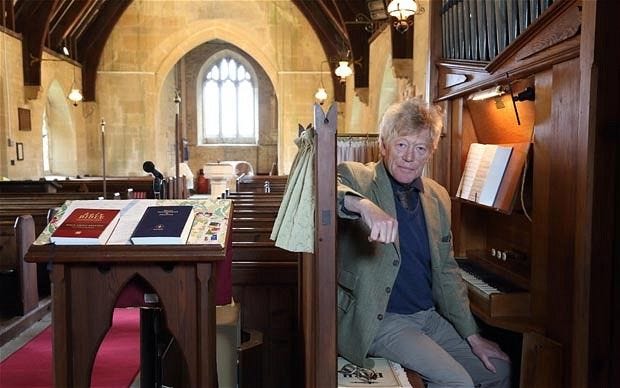
My exhortation is here pointed at those who would generally call themselves conservatives —usually political conservatives and simply temperamental ones. My charge here to them is properly summarised in Sir Roger Scruton’s (1944-2020) playful quip that “we can’t be about ‘debunking’. Rather, we need ‘bunking’.” A cheerful but penetrating response. For its inverse depicts what is fairly the case among conservatives.
If the conservatives will have any feather at all on their hats, even if they did nothing to earn it except by an accident of temperament, it is that the conservatives are right. At least, on the basic facts of the human experience, which are true and timeless for all human entities and all cultures everywhere. There are a number of these things that the conservative can nail as right to his hat without much effort, apart from simply receiving them.
But where they are right, they lack the aptitude to build. We often find missing the competence to use the tools so-received to preserve and transmit any real and positive change. For the conservative’s greatest blessing and curse is the desire to be left alone. This, as well, they hold in common with the libertarians.
It is not unfair to compare conservatives with Hobbits, both positively. For it is in the general character of the latter to be an “unobtrusive and ancient people,” who “love peace and quiet and a well-tilled earth: a well-ordered and well-farmed countryside was their favourite haunt.” Who also do not “understand or like machines more complicated than a forge-bellows, a water-mill, or a hand-loom, though they were skilful with tools.” In their love of peace and quiet, they have also mastered the “art of disappearing swiftly and silently.” Such is the conservative.
All these things are good qualities. But only if the time is right; right for true levity and cheerfulness and the love of everyday things. For as Gandalf commends about the Hobbits, they “will sit on the edge of ruin and discuss the pleasures of the table, or the small doings of their fathers, grandfathers, and great-grandfathers, and remoter cousins to the ninth degree, if you encourage them with undue patience.” And certainly, there is something divine in being able to sit on the edge of ruin and discuss the pleasures of the table. It does no one good to be buried under dark brooding in the face of ruin. If the world be dark, let our spirits be light —light both in the sense of illumination and levity. For joy, truly, is strength. So, this credit should be awarded when due to those who have the habit.
However, those who want peace must also prepare for war. Prepared to defend this peace and nearness to vegetation that they so cherish. They must be prepared to preserve and transmit the idyllic life to their progeny. Or else, they are nothing other than Onan, who enjoys the pleasure of conjugal relations with his dead brother’s wife but ultimately wastes his seed to avoid raising an inheritance for his brother. Onan is an archetype of selfishness whose judgment was rightly deserved. The conservative who is unwilling to build flirts always with the archetypal judgement of Onan; but even worse, he refuses to leave an inheritance for his own children.
To then keep pointing to one’s rightness about things without digging to transmit the goods of the human soul, which endures, is to enjoy the pleasure while avoiding the cost that counteracts that pleasure and prevents it from being unbounded. In this way as well, the conservative swims like a spiritual libertine and is graded worse —because of a matter of the realm of his libertinism— than the merely sexual libertine. It is good for a man to pay the cost of the bread. And he pays the cost by paying it forward, as it was done for him.
In an expert shell of his regular genius, Chesterton outlines the true task of the conservative:
“All conservatism is based upon the idea that if you leave things alone you leave them as they are. But you do not. If you leave a thing alone you leave it to a torrent of change. If you leave a white post alone it will soon be a black post. If you particularly want it to be white you must be always painting it again; that is, you must be always having a revolution. Briefly, if you want the old white post you must have a new white post.”
I have also observed that when the conservative is not winning, he tends to be whining. He also seems to enjoy whining. And this is its own species of Onanism as well. But even a more frustrating type. For it never delivers any true satisfaction apart from getting one teased and on edge endlessly. I liken it to getting teased at a strip club. That much talk and lament about how bad things are, and debunking but with no real steps of action and ‘bunking’ is the mental equivalent of ‘blue balls’ without consummation and relief. Debunking is not sustainable. We must get to ‘bunking.’
If all the sexual imagery leaves you uncomfortable, consider that the intellectual life may be considered not really in sexual, but erotic terms. The carnal and spiritual are analogues.
But most importantly, this essay is dedicated to Sir Roger Scruton, one of the greatest conservative minds of the 20th century, who would have been 82 today. May the good Lord bless the memory of the great man.
Requiescat in pace, Sir Roger.